Trending News
Kenya Adopts 2026 Menstrual Economy Declaration to Boost Local Production and Affordability
"The government has omitted taxes on sanitary towels to make the products affordable to everybody. This is part of the broader effort to ensure that menstrual health remains a priority and that no girl or woman is denied access because of cost," Manyasi said.

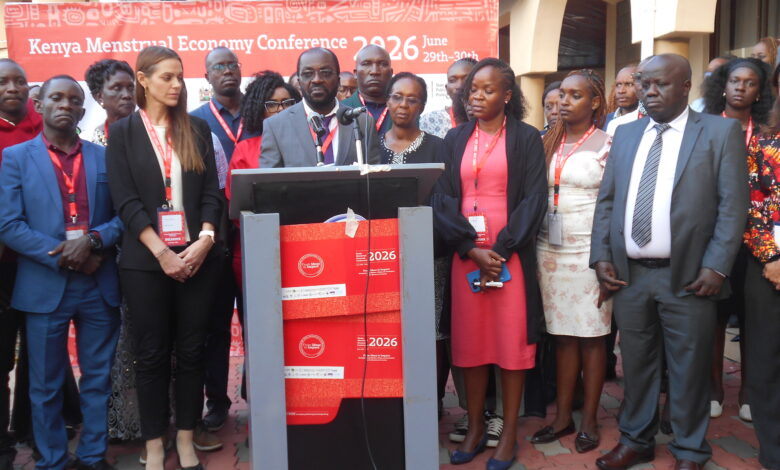
The government of Kenya has reaffirmed its commitment to improving access to affordable menstrual health products by supporting local manufacturing, maintaining tax incentives on sanitary products, and strengthening partnerships, aiming to ensure that no woman or girl is left behind.
The commitments were highlighted during the adoption of the Kenya Menstrual Economy Conference (KMEC) 2026 Declaration at the Kenya Institute of Curriculum Development (KICD) in Nairobi, where stakeholders from government, development partners, manufacturers, and civil society endorsed a roadmap to transform the country’s menstrual economy.
Presenting the declaration, Alex Manyasi, Head of Policy, Advocacy and Research at the Centre for African Progress (CentAPro), said the government has already taken significant steps to make menstrual products more affordable by removing taxes on sanitary towels while creating an enabling environment for local manufacturers.
“The government has omitted taxes on sanitary towels to make the products affordable to everybody. This is part of the broader effort to ensure that menstrual health remains a priority and that no girl or woman is denied access because of cost,” Manyasi said.
He noted that despite the progress made, many women and girls, particularly those from vulnerable communities, still struggle to access menstrual products, underscoring the need for sustained government support and coordinated action across sectors.
Manyasi said the declaration proposes the establishment of a Multi-Agency Action Plan on the Menstrual Economy under the leadership of the Ministry of Investments, Trade, and Industry to coordinate efforts among national and county governments, manufacturers, financial institutions, researchers, and development partners.
“We are bringing together all key stakeholders to ensure Kenya builds a resilient and investment-ready menstrual economy that advances the health, dignity, and economic empowerment of women and girls,” he said.
The declaration also places strong emphasis on strengthening domestic manufacturing by supporting local enterprises through certification, innovation, access to finance, and expanded market opportunities.
According to Manyasi, local manufacturers have continued to increase production, improve product availability in communities and schools, and collaborate with other industry players to ensure quality menstrual products are accessible across the country.
“Our goal is to offer standardized, quality menstrual health products while supporting local industries to grow and compete regionally,” he said.
Stakeholders are further committed to promoting environmentally sustainable production, improving menstrual waste management systems, strengthening research and evidence generation, and mobilising investment across the menstrual health value chain.
The declaration, signed by representatives from government, development partners, manufacturers, and civil society organisations, is expected to guide future policy reforms and investments aimed at positioning Kenya as a regional leader in menstrual health while ensuring every woman and girl has access to safe, affordable, and sustainable menstrual products.


