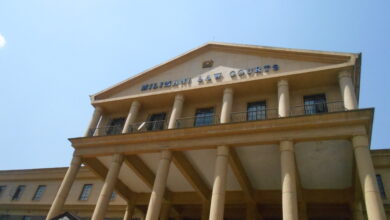
Court Showdown: Transport Saccos Fight Nairobi’s Ban on Petrol Station Pickups
“The vehicles have a parking yard in the Industrial Area in Nairobi where a single vehicle pays a parking fee of Ksh 500 per day to the city government,” Omari said.


A group of 12 matatu Saccos has moved to the High Court seeking its intervention after the County Government of Nairobi required them to vacate their passenger pickup points within the city center.
The Sacco leaders of the said matatus plying different routes across the country claim that they have been operating at the said terminus for years without causing any harm, as alleged by the petitioners.
Represented by lawyers Danstan Omari, Matina Swiga, and Stanley Kinyanjui, the Sacco that operate within the concerned terminuses have been doing so for more than 20 years without any incidents stemming from fuel- or LPG-related hazards.
The Saccos that have been in operation between 1994 and 2006 consist of more than 1,000 vehicles picking up passengers at petrol stations in the city center, where two cars enter at a time to avoid congestion.
“The vehicles have a parking yard in the Industrial Area in Nairobi where a single vehicle pays a parking fee of Ksh 500 per day to the city government,” Omari said.
Omari also stated that two vehicles enter the terminus at a time to pick up passengers, without posing any obstruction or danger.
According to the court data report, no incidents have ever been reported during their operations at those termini. They operate throughout the region, from Nairobi, Thika Road, Mombasa Road, and Kenyatta Road to Gatundu and other routes.
In their replying affidavit, they claim that if the court compels them to halt operations, the government would incur a substantial annual revenue shortfall of approximately Ksh 3,176,397,160.
This encompasses both national and county-level contributions from the entities’ activities, including fees, licenses, taxes, and levies associated with vehicle operations and regulatory compliance.
The operators also indicated that if the Saccos’ services are halted for any reason, the shutdown would directly affect 3,485 staff members across the 12 Saccos, resulting in unemployment in the transport industry.
The loss of income would also lead to financial difficulties, limiting access to necessities such as nutrition, education, medical care, and shelter, thereby heightening poverty risks.
They are urging the court to disallow the application, as it will disrupt not only the services offered to thousands of Kenyans daily but also have a broad impact on the government of the Republic of Kenya.
Led by Transline Classic Sacco chairman Wilfred Ondala, Clinton Kioko Wambua of Prestige Sacco, and Jackson Mumo of Makos Sacco, they called on the court to reject the application, as it would affect the lives and economy.
The petitioners, John Karuu and Ezekiel Oyugi, Kenyan citizens, in their affidavit claim to act in the public interest, seeking accountability, transparency, and potential safety threats committed to the City County of Nairobi.
Referring to Section 58 of the Environmental Management and Coordination Act (EMCA), any major industrial project that could significantly affect the environment must undergo an Environmental Impact Assessment (EIA). However, Ola Energy and Total Energies’ recent actions appear to fall short of full compliance with this legal requirement.
They claim that OLA Energy (Afya Center) and OLA Energy (OTC) have been operating in violation of Article 69(1)(d) of the Constitution, which requires the public to be involved in environmental governance.
They are seeking orders restraining the Saccos from ceasing all operations at petrol stations with immediate effect and relocating to the designated termini, such as Green Park and Bus Station.
Further, they are seeking orders directing the National Environment Management Authority (NEMA) and Energy and Petroleum Regulatory Authority (EPRA) to revoke operating licenses of Total Energies (Rhino), Ola Energy (Afya Center), Ola Energy (OTC), and cease operations for non-compliance with safety regulations till proper measures are put in place.
In his direction, Justice Alexander Muteti directed that the petition be served within 7 days and that the responses be filed within 14 days.
The matter will be mentioned on January 26, 2026, for further directions.