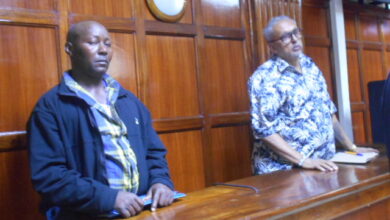
Kenyan Court Frees Man Accused of Identity Theft Despite Ties to Somalia Mayor Race
"Court is bound to acquit where doubt exists as reinforced in Bhatt V Republic (1957) EA 332, which states that where the prosecution's evidence is unsatisfactory, or leaves gaps, the accused is entitled to an acquittal." The magistrate read.

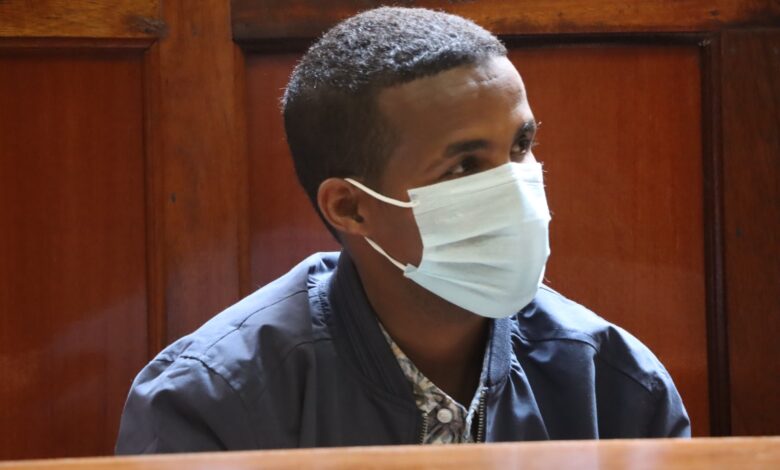
In an astonishing decision, an accused person believed to be a Somali national is free from blame of acquiring identity by pretence, being unlawfully present in Kenya, and giving false information to a government officer.
Abdihakim Saidi Jama, alias Mohamed Hussein Noor, was previously convicted by a Makadara court of assaulting his former employer, Ayni Hussein Mahamoud, in a Criminal Case No. 6180/2022, where he was fined Ksh 100,000.
Whilst in custody, he became the subject of an investigation about his nationality after it emerged that he had allegedly obtained a Kenyan Identity Card fraudulently.
Investigations revealed that the accused obtained a Kenyan Identity card using a copy of an identity card belonging to Fatuma Mohamed (ID No. 007005), claiming to be his mother. Still, Fatuma later denied any maternal relationship or knowledge of the accused’s claims.
The revelation led the investigating officer to get back to court seeking 14-day custodial order to conclude investigations against Jama, a plea that was granted. During this juncture, the initial investigating officers were suddenly replaced, raising eyebrows about the direction of the case.
The case was later transferred to Milimani, where he was charged, and a plea of not guilty was entered; he was released on a bond of Ksh 30,000 with two Kenyan sureties.
According to the documents that were tabled in court, during this time of the trial, Jama went back to Somalia to contest a political position where he contested for an elective seat as Mayor of Warsheekh, a coastal town located 90 kilometers from Mogadishu.
Campaign posters and pictures posted on his Facebook account were tabled in court at Makadara after he absconded from several sessions, leading to a warrant of arrest being issued. Those materials were shared with investigators to strengthen the prosecution’s case in Milimani.
Investigations further revealed that during the passport application, the accused presented a birth certificate (Entry No.L00906313/13) during his 2015 passport application, which was issued to him on July 13, 2015. Upon verification at the Registrar of Births and Deaths, it was discovered that the birth certificate belonged to Ann Gatwiri Kithure. Supporting evidence, including Form A1, was presented to demonstrate forgery. Shockingly, Ann Gatwiri Kithure was never called to record a statement, leaving another loophole in the case.
In defence, the accused, through his lawyer, presented a different birth certificate (L00903913/16), disputing the first one. He also produced death certificates of his supposed parents; all issued in 2016.
Another question arises: If the accused obtained a passport in 2015, which birth certificate did he actually use?
The prosecution called seven witnesses to prove its case, one being Ayni Hussein Mahamoud. In her testimony, she said she had known the accused person since childhood because they hail from the same place in Somalia, Mogadishu, Waberi area, and both were members of the Celi Omar sub-clan.
She also told the court she had employed him in 2019 as the manager of her business in Eastleigh without a written contract, although documentation related to him being the manager existed. She told the court that the accused was known to her as Mohamed Hussein Noor, who contested a political position in Somalia. She lacked political records of the results.
Mahamoud admitted there existed a business wrangle with the accused, where she claims that Jama shut down her business worth Ksh 6 million, and the same was taken over together with his family. At the same time, she was stuck in the UK during the COVID-19 pandemic.
In strengthening her evidence, Mahamoud furnished the DCI with information, a YouTube channel known as ”Mega Sport” where Jama was campaigning for political office in Somalia, disclosing his real name, being Mohamed Hussein Noor, and his educational background.
She told the court she knew the accused’s mother, Halima Omar, who is alive, and her neighbour in Somalia, but the father is deceased. She admitted not knowing Fatuma Mohamed, whom the accused claimed to be his mother.
Fatuma Mohamed testified that she did not know the accused person, and she had come to testify after being informed by the DCI that an unknown person had used her identification card number to register an identity card.
She denied being his mother or knowing her.
Abdi Issak Alio, a village elder in Ilopesa village and a member of a vetting committee during the issuance of identity cards, said he did not participate in the vetting of the accused. “On the material day in question, I did not attend the vetting process.”
Though his name and signature appeared in the vetting form when the accused was alleged to be vetted, he said someone might have forged it.
He testified that he does not know the accused person and the said Fatuma since they do not hail from his village.
Joan Chuloolle, an immigration officer based at Nyayo House, Compliance and Enforcement section, appeared under the request of the DCI to confirm whether the identity card of the accused had been applied for a passport, a fact she confirmed. She produced a travel history of the accused person under passport No. BK019894 issued to Abdihakim Said Jama.
On September 22, this year, the court acquitted the accused under Section 215 of the Criminal Procedure Code.
In acquitting the accused, Milimani Principal Magistrate Rose Ndombi stated that “after considering the evidence presented in its totality, I find that the benefit of doubt is in favour of the accused person herein. I therefore find the accused person not guilty on all three counts.”
The court cited the case in Ndung’uNdung’u Kimanyi v. Republic (1979) KLR 282, the Court of Appeal emphasized that “the witness upon whose evidence it is proposed to rely should not create an impression in the mind of the court that he is not a straightforward person….it is unsafe to base a conviction on such evidence.
The court indicated that upon applying this principle, the court must carefully scrutinize Mahamoud’s testimony because her prior personal disputes with the accused may create a risk of bias.
The magistrate also indicated that Mahamoud did not produce any tangible document except her words of mouth, that there existed business documentation with the real name of the accused, and that he contested the mayorship in Mogadishu.
In a case, Republic v. Michael Muchiri Mwangi (2018) eKLR, the court dismissed the case brought against the accused person after finding that the accused, a business partner, had ulterior motives in using the criminal justice system to settle commercial scores.
“Court is bound to acquit where doubt exists as reinforced in Bhatt V Republic (1957) EA 332, which states that where the prosecution’s evidence is unsatisfactory, or leaves gaps, the accused is entitled to an acquittal.” The magistrate read.