NACADA Joins Legal Battle Over Marijuana Legalization in Kenya
"The Rastafarians cannot be discriminated for being the minority and they have not practiced their faith in a manner that is repugnant to morality," Omari stated.


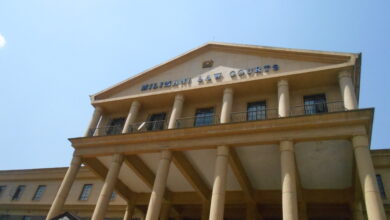
The High Court in Nairobi has adjourned the hearing of the Rastafarian Society of Kenya (RSK) matter seeking legalization of marijuana for religious purposes following the application by the National Authority for the Campaign Against Alcohol and Drug Abuse (NACADA) to be enjoined as the interested party.
Justice Bahati Mwamuye admitted the application by NACADA through their advocate, Christopher Marwa, to be enjoined, requesting time to file their response to the application.
The matter will proceed for two consecutive days, January 14 and 15, 2026. Still, following the application by NACADA, the hearing was set to proceed on January 30 and February 4, 2026, in an open court.
“Your honour, we are seeking to be joined as an interested party in this petition and also we pray for an adjournment to file our response on the same,” the lawyer requested.
Justice Mwamuye admitted the application and directed them to file and serve their response within 14 days.
“The application is hereby allowed, and you have 14 days to file and serve the response to the other parties, and we will come back to Court on January 30 and February 4, 2026, for the hearing.
The petition, filed by Sheria Mtaani on behalf of the Rastafari Society, seeks to overturn several provisions of the Narcotic Drugs and Psychotropic Substances (Control) Act, 1994, arguing that the blanket criminalisation of cannabis violates the constitutional rights of Rastafari adherents to practice their faith and live with dignity.
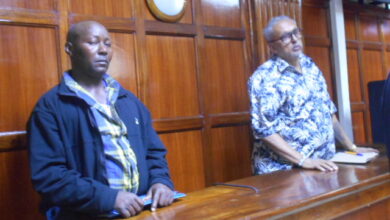
Being represented by Lawyers led by Danstan Omari and Shadrack Wambui, the petitioners lament frequent harassment by police officers alleging them to have marijuana,
“We want to warn those police officers who are victimizing Rastafarian and put them on notice that there is a matter proceeding in court and they must stop harassing them until the issue is determined,” Wambui said.
He also notified those police officers that the Rastafarians are practicing their faith for spiritual nourishment and meditation, and victimizing them goes against the Constitution’s freedom to practice one’s faith.
On his part, Omari indicated that Article 32 of the Constitution has been violated since nobody is allowed to interfere with how one conducts their faith.
He said that the Constitution protects all marginalized groups in the country, Rastafarians being one of them, and a minority.
“The Rastafarians cannot be discriminated for being the minority and they have not practiced their faith in a manner that is repugnant to morality,” Omari stated.
The Society, registered under the Societies Act as the umbrella body for Rastafari mansions, tabernacles, orders, and individual followers, says the law’s strict penalties unfairly target their spiritual practices.
The Court will hear their long-running petition challenging sections of the country’s narcotics law, which the Court will listen to determine the way forward. The hearing of the application will proceed in two consecutive days, bringing to an end the legal battle that started in 2021, in which the State has never responded.
The judge had ordered earlier that the hearing would proceed even without the participation of the State, should the replies remain outstanding and deliver the judgment.
According to the petition, the ritual and sacramental use of cannabis is a tradition central to Rastafari identity. It is treated as a criminal act, resulting in stigma, discrimination, and marginalisation of its members.
Their spokesperson, Mwendwa Wambua alias Ras Prophet, describes the case as a fight for religious dignity and equal treatment under the law. He notes that the Rastafari movement in Kenya follows globally recognised spiritual traditions rooted in African culture, with cannabis, referred to as the “holy herb”, forming an integral part of meditation and communal worship.
The Attorney General and the Kenya Law Reform Commission are listed as respondents. The petitioners, represented by lawyers Danstan Omari and Shadrack Wambui, accuse the State of failing to review outdated narcotics laws that criminalise private or communal use, preparation, or cultivation of cannabis for religious purposes.
They want the Court to declare sections 3, 5, and 6 of the Narcotics Act unconstitutional for failing to recognise religious use of cannabis, yet granting exemptions to medical professionals and other authorised handlers of narcotic substances.
The petition argues that failure to accommodate Rastafari religious practice violates their rights to equality, non-discrimination, privacy, freedom of religion, and human dignity as protected under Articles 27, 31, and 32 of the Constitution.
The petition faults the Attorney General and the Kenya Law Reform Commission for failing to initiate reforms to align narcotics laws with the Constitution and protect minority religious groups, contrary to Article 21, which obligates the State to respect and fulfill rights and freedoms.
The petitioners are asking the Court to allow the religious use, possession, and cultivation of cannabis in private dwellings and designated places of worship, and to compel the State to undertake legal reforms to ensure equal protection of all faith communities.
They further argue that the penalties under the current law, including imprisonment terms of up to 20 years, are disproportionately harsh and fail the constitutional test of reasonableness under Article 24.