Rastafari Society Sues State for Right to Use Cannabis in Worship
The Society says "Rastafari members are routinely subjected to harassment, arbitrary searches, stigma and prosecution for acts they consider sacred."

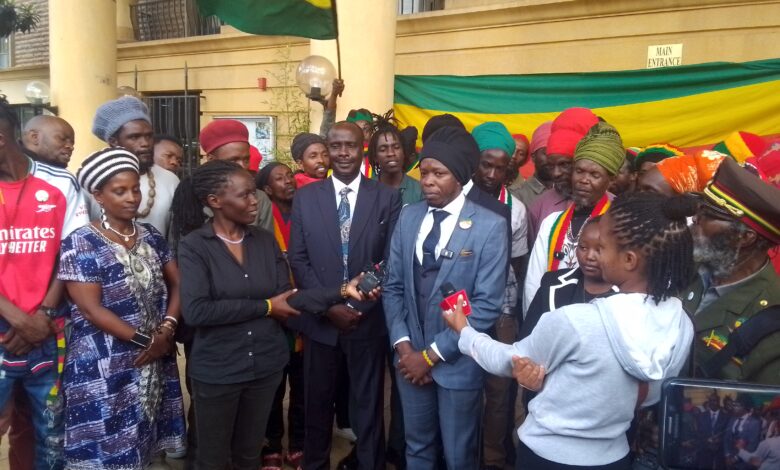
The Rastafarian Society of Kenya (RSK) has moved to the High Court seeking legal nod to freely cultivate and use cannabis sativa for their own private use.
The petition, filed by Sheria Mtaani on behalf of the Rastafari Society, seeks to overturn several provisions of the Narcotic Drugs and Psychotropic Substances (Control) Act, 1994, arguing that the blanket criminalisation of cannabis violates the constitutional rights of Rastafari adherents to practise their faith and live with dignity.
The Society, registered under the Societies Act as the umbrella body for Rastafari mansions, tabernacles, orders and individual followers, says the law’s strict penalties unfairly target their spiritual practices.
Their long-running petition challenging sections of the country’s narcotics law is finally set for a hearing after the High Court issued fresh directions.
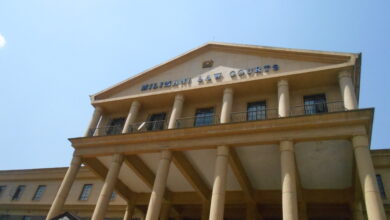
Sitting at the High Court in Milimani, Justice Bahati Mwamuye directed that the matter proceed to a full hearing on January 14 and 15, 2026, noting that the case filed in 2021 had come up for mention, but the State was yet to file its responses.
The judge ordered that the hearing will proceed even without the participation of the State should the replies remain outstanding.
According to the petition, the ritual and sacramental use of cannabis is a tradition central to Rastafari identity. It is treated as a criminal act, resulting in stigma, discrimination and marginalisation of its members.
Their spokesperson, Mwendwa Wambua alias Ras Prophet, describes the case as a fight for religious dignity and equal treatment under the law. He notes that the Rastafari movement in Kenya follows globally recognised spiritual traditions rooted in African culture, with cannabis, referred to as the “holy herb”, forming an integral part of meditation and communal worship.
The Attorney General and the Kenya Law Reform Commission are listed as respondents. The petitioners, represented by lawyers Danstan Omari and Shadrack Wambui, accuse the State of failing to review outdated narcotics laws that criminalise private or communal use, preparation or cultivation of cannabis for religious purposes.
They want the Court to declare sections 3, 5 and 6 of the Narcotics Act unconstitutional for failing to recognise religious use of cannabis, yet granting exemptions to medical professionals and other authorised handlers of narcotic substances.
The petition argues that failure to accommodate Rastafari religious practice violates their rights to equality, non-discrimination, privacy, freedom of religion and human dignity as protected under Articles 27, 31 and 32 of the Constitution.
The Society says “Rastafari members are routinely subjected to harassment, arbitrary searches, stigma and prosecution for acts they consider sacred.” As a result, adherents are forced to choose between compliance with the law and devotion to their faith.
They cited that cannabis is used both in individual meditation through smoking, drinking, eating or burning incense and in reasoning sessions, which are communal worship rituals held in tabernacles. They are indicated to have several tabernacles across the country, including in Kibera, Utawala and Makueni, and have been legally registered since 2017.
The petition draws heavily on constitutional protections and international human rights instruments ratified by Kenya, including the ICCPR, the Universal Declaration of Human Rights, and the African Charter on Human and Peoples’ Rights, arguing that the current law is discriminatory and out of step with global developments. It cites the 2020 UN Commission on Narcotic Drugs decision to remove cannabis from the list of the most dangerous substances as proof that Kenya’s approach is “archaic”.
The Society also highlights its involvement in environmental conservation efforts, including past collaborations with the late Prof. Wangari Maathai’s Green Belt Movement, to counter negative stereotypes and demonstrate its contribution to the country’s social fabric.
The petition faults the Attorney General and the Kenya Law Reform Commission for failing to initiate reforms to align narcotics laws with the Constitution and protect minority religious groups, contrary to Article 21, which obligates the State to respect and fulfil rights and freedoms.
The petitioners are asking the Court to allow the religious use, possession and cultivation of cannabis in private dwellings and designated places of worship, and to compel the State to undertake legal reforms to ensure equal protection of all faith communities.
They further argue that the penalties under the current law, including imprisonment terms of up to 20 years, are disproportionately harsh and fail the constitutional test of reasonableness under Article 24.